Grid & Infrastructure

Our Grid Network

Electricity travels through connected substations and transmission lines before local distribution networks deliver it to consumers. National Grid-Pakistan operates the high-voltage network at the heart of this journey.

Explore Our Operating Regions

The Network in Numbers

Network Overview

Explore the infrastructure behind Pakistan’s electricity transmission.

Existing grid figures are unchanged while client clarification is pending. Source: NGC Quick Facts · September 2026. Reporting periods and counting conventions remain subject to technical confirmation.

Existing System · 2026
Substations70substations
Transformation Capacity70,910MVA
Transmission Lines21,763km · AC network only

Two Voltage Levels, One Connected Network

The 500 kV backbone moves bulk electricity over long distances. The 220 kV network connects regional load centres.

Explore Ten Years of Growth →

By Region

Explore the Network by Region

See key grid stations, transmission roles and national grid connections in each operating region.

Central Punjab network

Operating Region

Lahore Network

The Lahore region serves cities, industry and agriculture across central Punjab.

20220 kV grid stations
6500 kV grid stations
Key Grid Stations and Connections
Lahore: entries 1–7
No.Station or Connection
1Bund Road
2Gakkhar
3Sialkot
4Kala Shah Kaku
5Ravi
6New Kot Lakhpat
7Sarfraz Nagar
Lahore: entries 8–14
No.Station or Connection
8Nishatabad
9Jaranwala Road
10Ludewala
11Wapda Town
12New Shalamar
13Ghazi Road
14Gujrat
Lahore: entries 15–19
No.Station or Connection
15Okara
16Kassowal
17Samundri Road
18Bandala
19Toba Tek Singh

Figures and names unchanged. Regional totals, classification and list completeness await clarification.

Network Highlights
  • Lahore-area stations connect through Sheikhupura, Kala Shah Kaku and New Lahore corridors.
  • Faisalabad, Sialkot, Gujrat and Okara are served through a dense 220 kV station network.
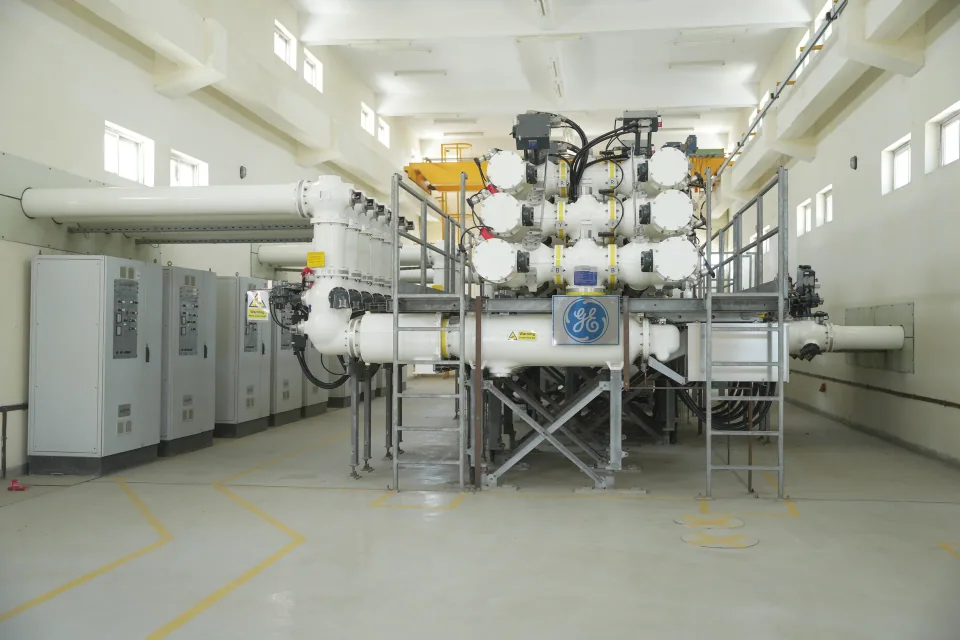
  • Some stations use gas-insulated switchgear (GIS), which houses switching equipment in a compact, insulated enclosure.
Ten Years of Development

Growth Over Time

Explore how the AC transmission network has expanded.

2025–2670,910 MVA
MVA

Swipe the chart sideways to explore all reporting years

020,00040,00060,00080,000

Select a year to explore its figures. Includes the AC network only. Source: NGC Quick Facts · September 2026; reporting years as labelled.

Energy and Demand

Power through the Years

Explore annual delivery and the demands placed on the network.

2025–26130,441GWh

Energy Transmitted

GWh

Swipe the chart sideways to explore all reporting years

050,000100,000150,000

Network Expansion

The Network Towards 2029

2026 Existing System70,910MVA

Reported transformation capacity

Transformation Capacity by Voltage (MVA)

2026 existing values; the same scale is used for both views.

765 kV—
500 kV29,100
220 kV41,810
±500 kV HVDC—
View Voltage-Level Figures
2026 existing system
VoltageSubstations / ConvertersCapacity (MVA)Lines (Circuit-km)
765 kV———
500 kV2029,1009,686
220 kV5041,81012,077
±660 kV HVDC2—886
±500 kV HVDC———
Total7070,91023,535

A dash is retained where the source supplies no numeric value; it is not treated as a confirmed zero. Its meaning, reporting periods and totals await client clarification. Future figures describe planned infrastructure.

Generation Context

The Installed Generation Mix

36,397 MW total installed capacity. Source: NGC Quick Facts · September 2026; reporting date awaits confirmation. These are generation categories, not National Grid-Pakistan-owned generation assets.

IPPs Thermal16,443MW · 45%
Reliability Indicators

T-SAIFI and T-SAIDI measure the frequency and duration of transmission interruptions. They are not an uptime percentage.

2025–26 0.1

index

Swipe the chart sideways to explore all reporting years

00.050.10.15

Grid Development

Building The Network
for What Comes Next

Explore the work behind equipment renewal, stronger transmission links and new connections.

Electrical equipment in a grid station buildingLoading image
Renew & Improve

Grid Modernisation

Equipment renewal supports the continued service of existing substations. Protection and monitoring help technical teams identify faults and manage asset condition.

  • Equipment renewal
  • Protection systems
  • Monitoring & control

Field operations

Skilled Hands and Essential Connections

Inspection, maintenance and operational coordination keep the transmission network working, day and night.

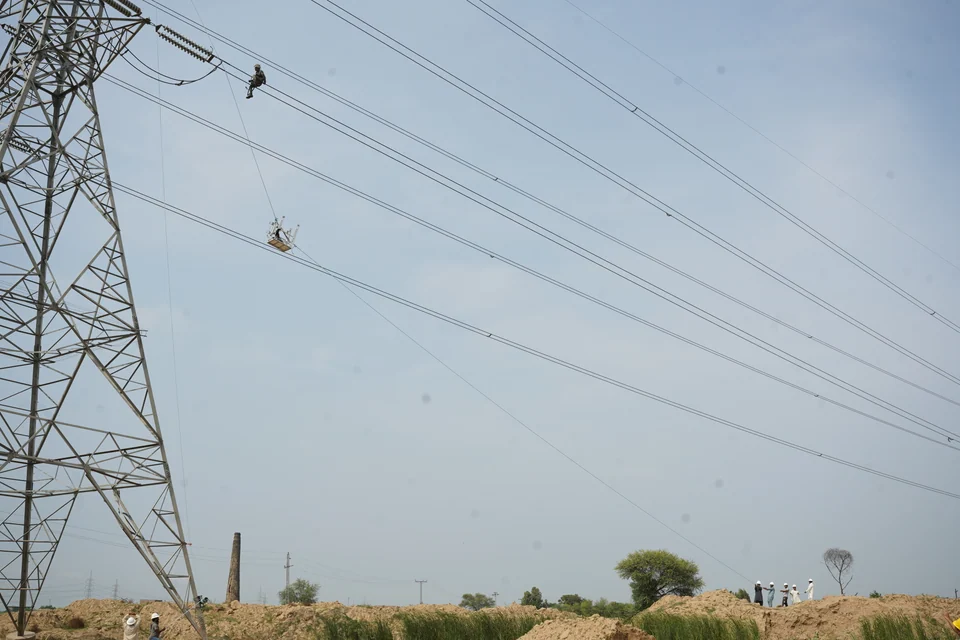
Field teams inspect towers, conductors and substation equipment for signs of wear or damage. Their findings guide repairs and equipment renewal, while protection and monitoring systems help teams identify faults.

Work on high-voltage assets requires planning and coordination. Maintenance teams and network operators organise access and outages so that essential work can be carried out safely.

About National Grid-Pakistan
Linemen working at height on transmission conductors beside a steel tower, with a suspended work basket and colleagues on the groundLoading image